

Electric 6DOF Motion Platform for Pilot Training: Engineering Ultra-low Latency
Executive Summary: Training a pilot requires more than visual immersion; it requires the precise engineering of “suspension of disbelief.” This article explores the physiological and mechanical challenges of building a pilot on the ground—from tricking the vestibular system to moving 5000kg cockpits with ultra-low latency precision—and why electric servo technology has become the standard for modern aviation certification.
The Vestibular Deception: Hacking the Inner Ear
To build a pilot without leaving the ground, you are not fighting aerodynamics; you are fighting biology. The human brain is an efficient lie detector, specifically designed to cross-reference visual data with physical sensation.
The challenge lies in the vestibular system. Inside the pilot’s ear, the otolith organs detect linear acceleration (gravity, takeoff thrust), while the semicircular canals detect rotation (roll, pitch, yaw). For a simulator to be effective, it doesn’t need to move far; it needs to move correctly.
This is the art of Motion Cueing. When a pilot pushes the throttle, the platform must jerk forward (surge) instantly to stimulate the otoliths, then slowly “wash out” (return to center) below the threshold of human perception. If this “onset cue” is accurate, the pilot’s brain interprets the data as sustained acceleration, even if the platform has only moved 200mm.
The Ultra-low Latency Requirement: The Speed of Nausea
The engineering enemy of flight simulation is latency.
There is a biological “Uncanny Valley” in motion. If the visual horizon tilts, but the physical roll sensation arrives 200ms later, the brain detects a conflict. This doesn’t just break the immersion; it causes Simulator Sickness and, more dangerously, Negative Training.
Negative training occurs when a pilot subconsciously learns to delay their inputs to match the simulator’s lag. In a real emergency, this split-second hesitation can be fatal. To prevent this, the Transport Delay (the time from software input to physical motion) must be < ultra-low latency. This is the hard deck for regulatory standards like EASA and FAA Level B certification.
Moving Heavy Metal: The Inertia Problem
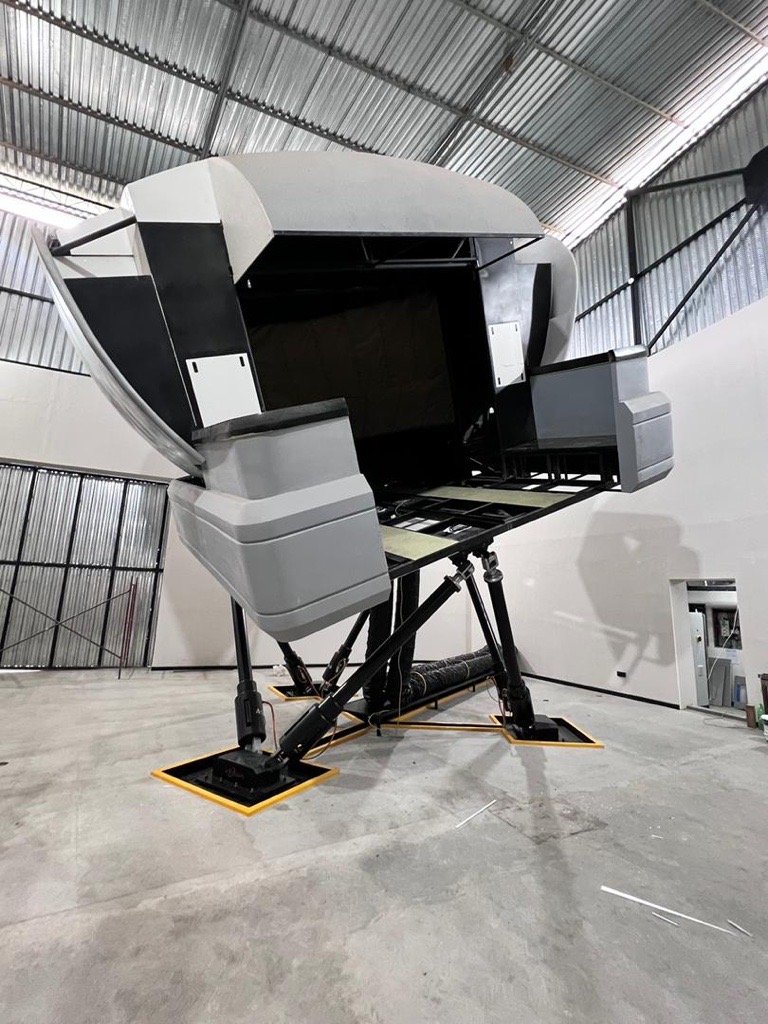
Tricking the ear is difficult enough; doing it while moving a 5,000kg replica cockpit is a massive mechanical challenge. A realistic “Mothership” setup—including the visual dome, fuselage, and avionics—possesses immense inertia. To initiate a sudden roll or heave (simulating turbulence), the actuators must generate massive instantaneous torque.
Legacy systems used hydraulics. While powerful, hydraulic fluid is compressible and relies on valves that introduce a physical delay. They struggle with the “snap” changes in direction required for high-fidelity turbulence simulation.
The Electric Solution: Siemens AC Servo Ecosystem
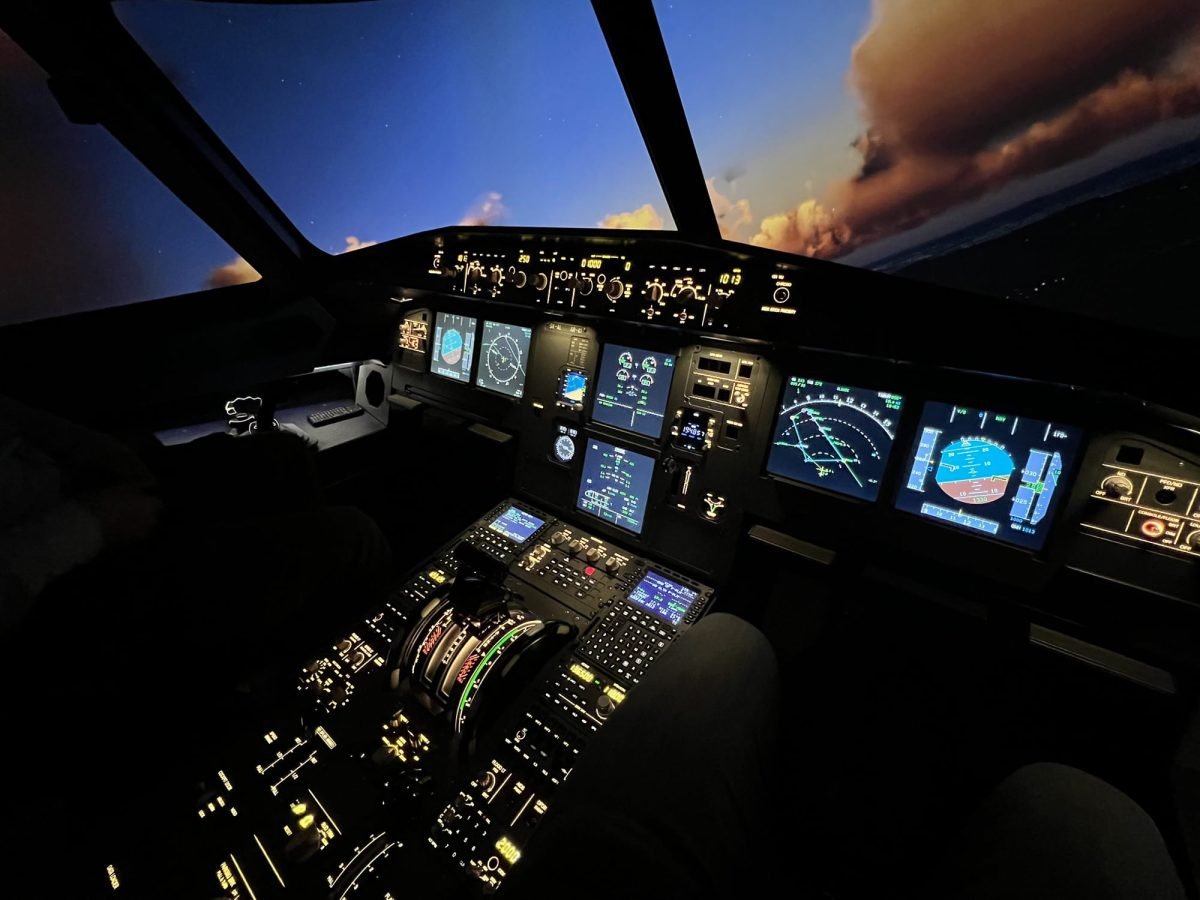
The industry has shifted toward Electric 6DOF Motion Platforms because they treat motion as data, not fluid dynamics. Systems like the KNT6 Series utilize Siemens AC Servo Motors to close the control loop digitally. This offers distinct engineering advantages for pilot training:
- Instant Torque: Electric servos provide immediate response, crucial for the “onset cues” mentioned earlier.
- High Frequency Update: With update rates between 100–250Hz, electric systems can vibrate the cockpit to simulate runway rumble or engine harmonics—tactile feedback that hydraulic systems dampen out.
- Deterministic Control: There is no fluid to warm up or leak. The motion is mathematically precise, every time.
- Payload Capacity 7500kg+
- Latency Limit Ultra-low
- Update Frequency 100–250Hz
- Drive System Siemens AC Servo
- Application EASA/FAA Level-B Ready
Building a Certified Training Center?
Ensure your motion cues match the physics of flight.
Request Technical SpecificationsWE DO WALK THE WALK
DECADES OF EXPERIENCE
OUR TEAM HAS DECADES OF REAL EXPERIENCE IN THE AVIATION BUSINESS.
