
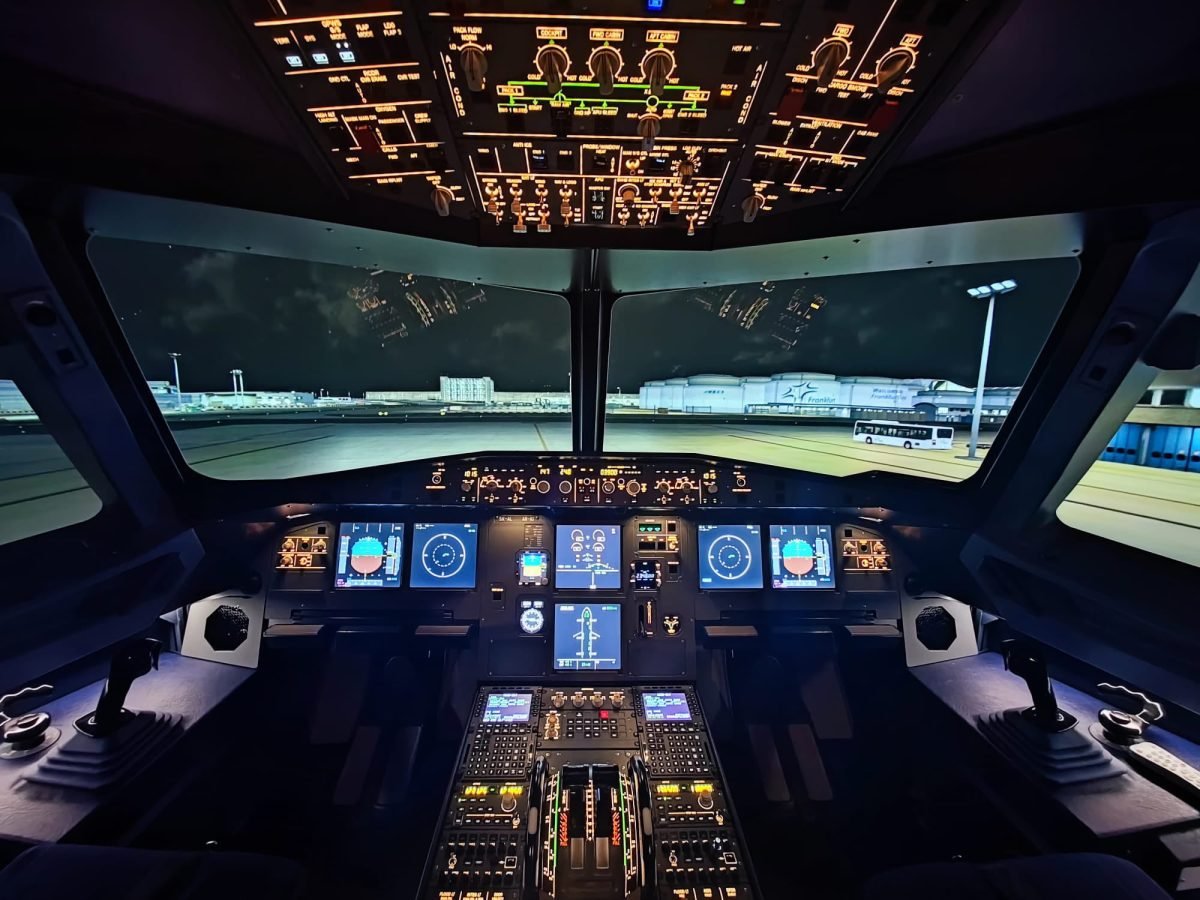
Beyond the Screen: Engineering Absolute Realism from Level B to Level D Immersion
The quest for absolute realism in industrial simulation is no longer a luxury—it is a mission-critical requirement for modern flight training organizations and defense contractors. While the industry has long stabilized around Level B immersion as the benchmark for high-fidelity training, a new frontier is emerging. Level D immersion represents the pinnacle of sensory engagement, pushing the boundaries of what is possible in a Motion Platform.
In this technical exploration, we will analyze the transition from the established Level B standards to the cutting-edge neurological integration of Level D, and how Kinnetek’s 6DOF Simulator architecture is paving the way for this revolution. We explore the engineering challenges involved in maintaining the “immersion bubble” and the critical role of hardware-software synchronization in high-speed motion cueing.
Defining Level B Immersion: The Industrial Benchmark
Level B immersion is characterized by a high degree of sensory engagement that creates a profound sense of presence. In the context of Industrial Simulation, this level is defined by the seamless orchestration of visual systems, high-fidelity audio, and precise haptic feedback. For a 6DOF Simulator, Level B requires sophisticated motion cueing algorithms that translate digital flight data into physical sensations with ultra-low latency.
At Kinnetek, we achieve this through our Stewart Platform architecture, utilizing high-performance Electric Linear Actuators. Unlike legacy hydraulic systems, our electric platforms offer the precision and response speed necessary to maintain immersion without the maintenance overhead of fluid-based systems. Every surge, sway, heave, roll, pitch, and yaw is delivered with industrial reliability through the Siemens SINAMICS drive system.
The Technological Pillars of High-Fidelity Presence
To achieve and maintain Level B immersion, several technological pillars must coexist and interact in real-time. This integration ensures that the operator’s brain accepts the virtual environment as an extension of the physical world.
Advanced Mixed Reality (MR) Integration
While VR immerses the operator in a fully digital environment, high-stakes defense training often requires Mixed Reality (MR). This allows physical cockpit controls to coexist with virtual external environments. The challenge lies in zero-latency motion tracking. Any disconnect between the physical hand positions and the virtual visuals breaks immersion immediately. Kinnetek systems are engineered to synchronize motion and visuals with sub-millisecond jitter.
Spatial Computing and Environmental Awareness
Spatial computing leverages technologies like computer vision and spatial mapping to enable immersive experiences that respond to users’ movements in real-time. This approach enhances the interaction between humans and digital content within the physical space. Our platforms use spatial data to adjust motion damping dynamically, ensuring that the 6DOF Simulator feels grounded and responsive to every control input.
Haptic Feedback through AC Servo Motors
The tactile dimension is critical. Our use of AC Servo Motors allows for nuanced force feedback that legacy systems simply cannot replicate. From the subtle vibration of an engine’s idle to the jarring impact of a hard landing, the haptic resolution of our platforms is what defines true Level B performance. This is not just vibration; it is high-fidelity torque control that communicates the weight and inertia of the simulated vehicle.
Introducing Level D: The Epitome of Absolute Realism
Level D immersion represents the bridge between simulation and reality. This classification goes beyond stimulating traditional senses, incorporating advanced technologies to replicate nuanced sensations, smells, and even tastes (where required by specific training silos), providing an unparalleled level of authenticity.
Level D Capabilities:
- Complete Sensorial Simulation: Incorporating wind resistance, thermal gradients, and olfactory cues.
- Neurological Integration: Direct brain-computer interface (BCI) monitoring for cognitive workload analysis.
- Near-Zero Latency: Achieving end-to-end response times below 100ms.
- Industrial-Grade Reliability: 24/7 mission-ready uptime through Siemens SINAMICS integration.
Level D immersion delves into the realm of neurological integration, aiming to interface directly with the user’s cognitive state. This involves advanced brain-computer interfaces (BCIs) that interpret neural signals, allowing for direct communication between the user’s performance metrics and the virtual environment. For elite pilots and R&D engineers, this means a training environment that adapts in real-time to their stress levels and decision-making speed.
Technical Specifications: The Electric Advantage
Transitioning to Level D requires a fundamental shift in hardware capabilities. The following specifications highlight why Kinnetek’s electric architecture is the preferred choice for high-fidelity immersion over legacy hydraulics.
- Motion Platform Latency Ultra-low
- Update Rate > 100Hz
- Drive System SIEMENS SINAMICS
- Actuation Type ELECTRIC SERVO
- Maintenance Interval NEAR-ZERO
- Certification Readiness EASA LEVEL B/D
The Industrial Impact of Level D
The medical field and defense sectors are the primary beneficiaries of this evolution. Medical training utilizing realistic simulations for complex surgical procedures can significantly enhance surgeon dexterity and patient outcomes. Similarly, in defense, the ability to replicate high-G maneuvers without the operational cost of fuel and airframe wear is invaluable.
Challenges remain, particularly concerning ethical considerations around BCI data and the long-term impact on mental health of near-perfect sensorial simulation. At Kinnetek, we prioritize responsible deployment, ensuring that our technical innovations are matched by robust safety and privacy protocols as outlined in our KNT Operations Manual rev2.6.
Engineering the Future of Motion
At Kinnetek, we don’t sell catalog products. We are an engineering firm dedicated to the philosophy of “Engineering to Measure.” Whether you require an EASA Level B compliant training platform or a bespoke Level D integration, our team is ready to design your solution.
DISCUSS YOUR PROJECT WITH OUR ENGINEERS
WE DO WALK THE WALK
DECADES OF EXPERIENCE
OUR TEAM HAS DECADES OF REAL EXPERIENCE IN THE AVIATION BUSINESS.
